
Choosing legacy code modernization software that supports mixed cloud and on premises environments is harder than planning a simple cloud migration. Most comparison charts only rank products by cloud capability or price and skip support for hybrid, on premises, or compliance-focused deployments. This comparison charts core features, programming language support, deployment flexibility, and compliance controls so engineering and IT teams can match a platform to real constraints.
Table of Contents
Golden Path Digital
At a Glance
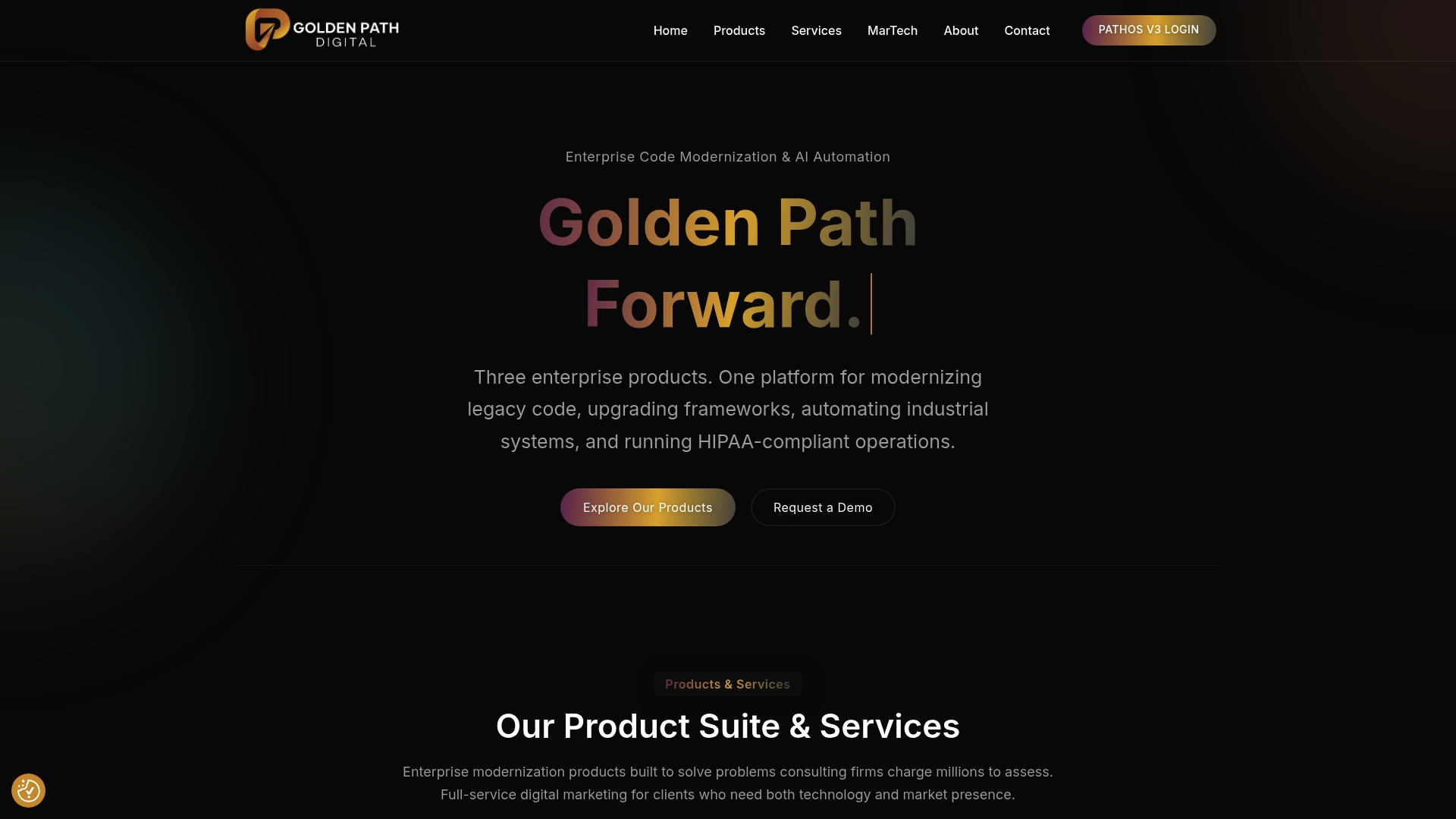
Golden Path Digital runs a rules-based modernization pipeline that maps code dependencies before applying AI. The firm pairs that technical work with marketing services such as SEO, PPC, and content strategy. Their stack targets enterprises with legacy IBM i and PHP frameworks and a need for secure, auditable deployments.
Core Features
Golden Path Digital combines three flagship tools: AS/Forward for parsing and analyzing IBM i RPG codebases, Laravel Ascend for PHP framework upgrades, and QuantaPath AI for CRM and workflow automation. The platform supports air-gapped deployment and security-focused architectures while preserving human validation gates. The team also provides business strategy consulting and digital marketing to align modernization with lead generation.
Key Differentiator
The single technical difference is the structured rule set that forces dependency mapping before any AI-driven transformation. That sequenced approach creates traceable decision points and audit records for each change. The method reduces the chance of hidden runtime dependencies being missed during automated refactors. That traceability appeals to regulated teams with tight compliance requirements.
Pros
Combining code modernization tools with marketing services lets technical and marketing teams work from the same project plan. The rules-based dependency mapping improves auditability and gives you clear rollback points during large refactors. Air-gapped deployment and model-agnostic AI options let legal or security teams keep data inside corporate infrastructure. The vendor pairs tool delivery with consulting, which reduces the need to stitch multiple vendors together for upgrades and outreach. The approach reduces consulting overhead by turning exploratory discovery into repeatable artifacts.
Cons
- Likely high cost and longer implementation timelines for full enterprise modernization projects.
Who It’s For
Enterprises running legacy systems such as IBM i, RPG, or older PHP frameworks that need modernization while preserving compliance controls. Organizations that must keep data on-premises or in an isolated environment will benefit from the air-gapped deployment options. Marketing teams that need technical alignments for SEO and lead generation also gain from the combined service model.
Unique Value Proposition
Air-gapped deployment options let you run QuantaPath AI models without sending code or data to external cloud providers. That choice changes procurement and risk calculations for compliance teams. The result is a modernization workflow you can validate on your infrastructure without losing the productivity gains of automated analysis.
Real World Use Case
A manufacturer used AS/Forward to parse its IBM i RPG codebase and produce a dependency map. The map fed into QuantaPath AI to automate specific workflow tasks while legal maintained data isolation. The vendor simultaneously refreshed the company website and PPC campaigns to recover search visibility lost during the migration.
Pricing
Pricing is consultative and scope driven. The company does not list fixed tiers. You can request demonstrations, pilot reports, and custom proposals that reflect project complexity, compliance needs, and deployment model.
Website: https://goldenpathdigital.com
Codemod
At a Glance
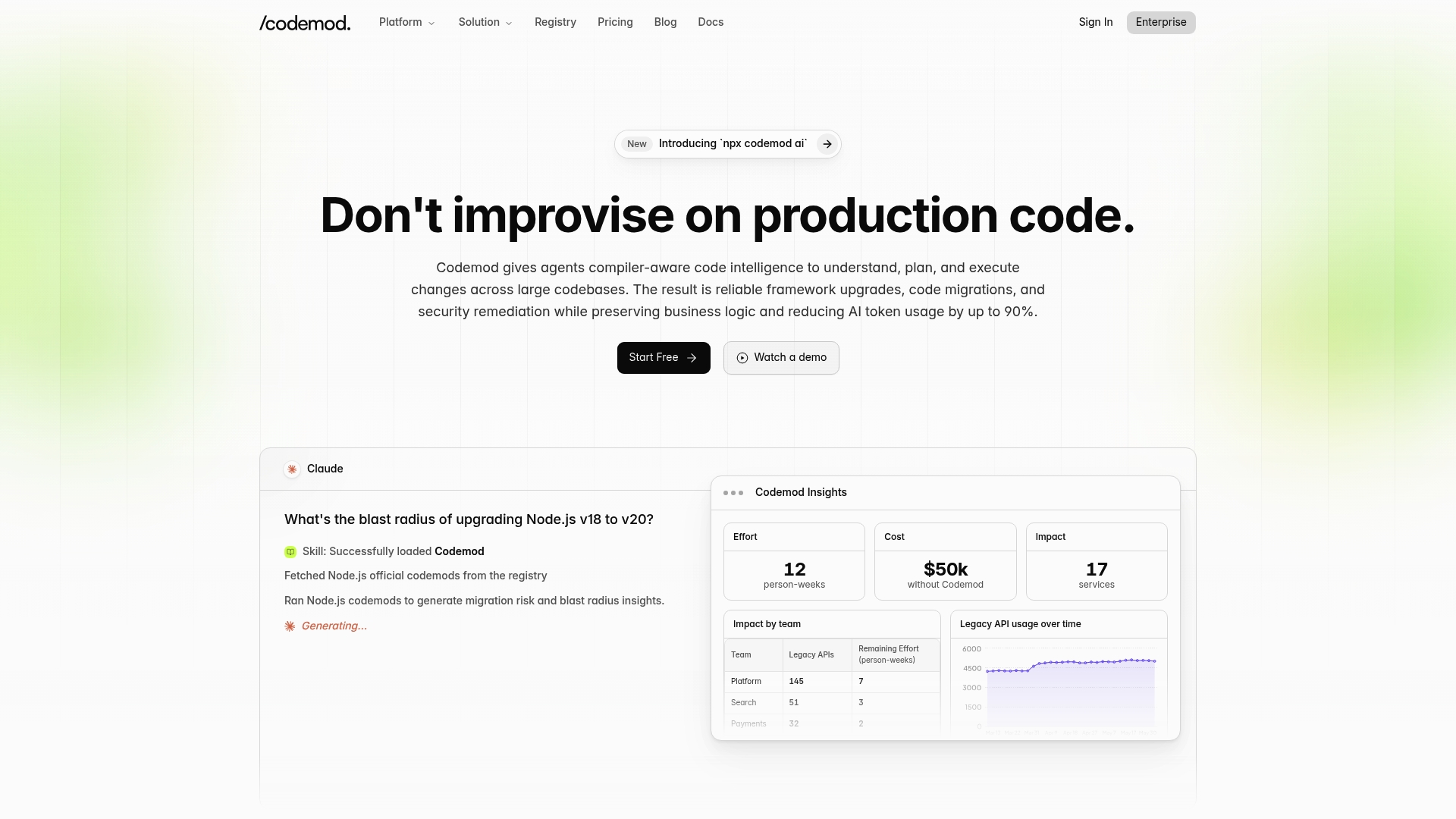
Codemod reports reducing AI token usage by up to 90%. The vendor reports more than 2 million codemod runs across community and enterprise users. The tool pairs compiler-aware code transformations with cross-repository orchestration to handle large migrations and security remediations. That combination targets engineering teams running coordinated, organization-wide changes.
Core Features
Codemod performs compiler-aware code transformations that preserve program semantics while changing APIs or patterns. It includes orchestration for multi-repo workflows and automation designed for enterprise scale, plus dashboards that surface migration progress and risk. Security and access controls include SOC2, role based access control, and single sign on to meet standard organizational requirements.
Key Differentiator
Codemod stands out for its compiler-aware transformation engine combined with orchestration across teams and repositories. This lets large codebases receive precise automated edits while the platform coordinates rollout and review. The product pairs that precision with a focus on reducing AI token consumption to lower operational AI costs.
Pros
Codemod enables reliable, scalable changes across large codebases by using compiler analysis to avoid syntax and type regressions. The platform reduces AI token costs, which lowers the variable expense of large scale automation and makes repeated migrations cheaper. It supports flexible deployments and enterprise controls, and the community adoption noted above suggests broad practical testing of its tooling.
Cons
- Specific third party reviews and detailed user feedback are not available. This makes independent validation of developer experience harder.
- The compiler aware approach can require a learning curve for teams new to AST driven transformations. Training or ramp time may be needed.
- Pricing tiers target teams and enterprises, so small projects or individual contributors may find the paid plans expensive.
When It May Not Fit
If your codebase is tiny or you only need occasional, manual refactors, the platform may be more heavy duty than necessary. Organizations that cannot allocate time for initial onboarding to compiler aware tooling may not realize immediate benefits. Teams that require verified independent user reviews before purchase will need to request references.
Notable Integrations
- GitHub
- GitLab
- Slack
- Jira
- Linear
Who It’s For
Large development teams managing extensive codebases with multiple repositories will get the most value. Platform engineering groups and migration squads running framework upgrades or mass package changes will benefit from the orchestration features. Security teams that require audit trails and SSO will find the compliance controls useful.
Real World Use Case
Zapier used Codemod to coordinate organization wide code migrations and to automate string extraction for internationalization. That effort reduced engineering manual work by automating repetitive edits and managing rollouts across many repositories. The case illustrates how orchestration and compiler aware edits work together in practice.
Pricing
Plans range from a free Community tier to paid Team and Enterprise options. The Team plan starts at $1,000 per month, and Enterprise pricing is custom and billed annually. The Community tier remains free forever for evaluation or small scale use.
Website: https://codemod.com
CodeAura
At a Glance
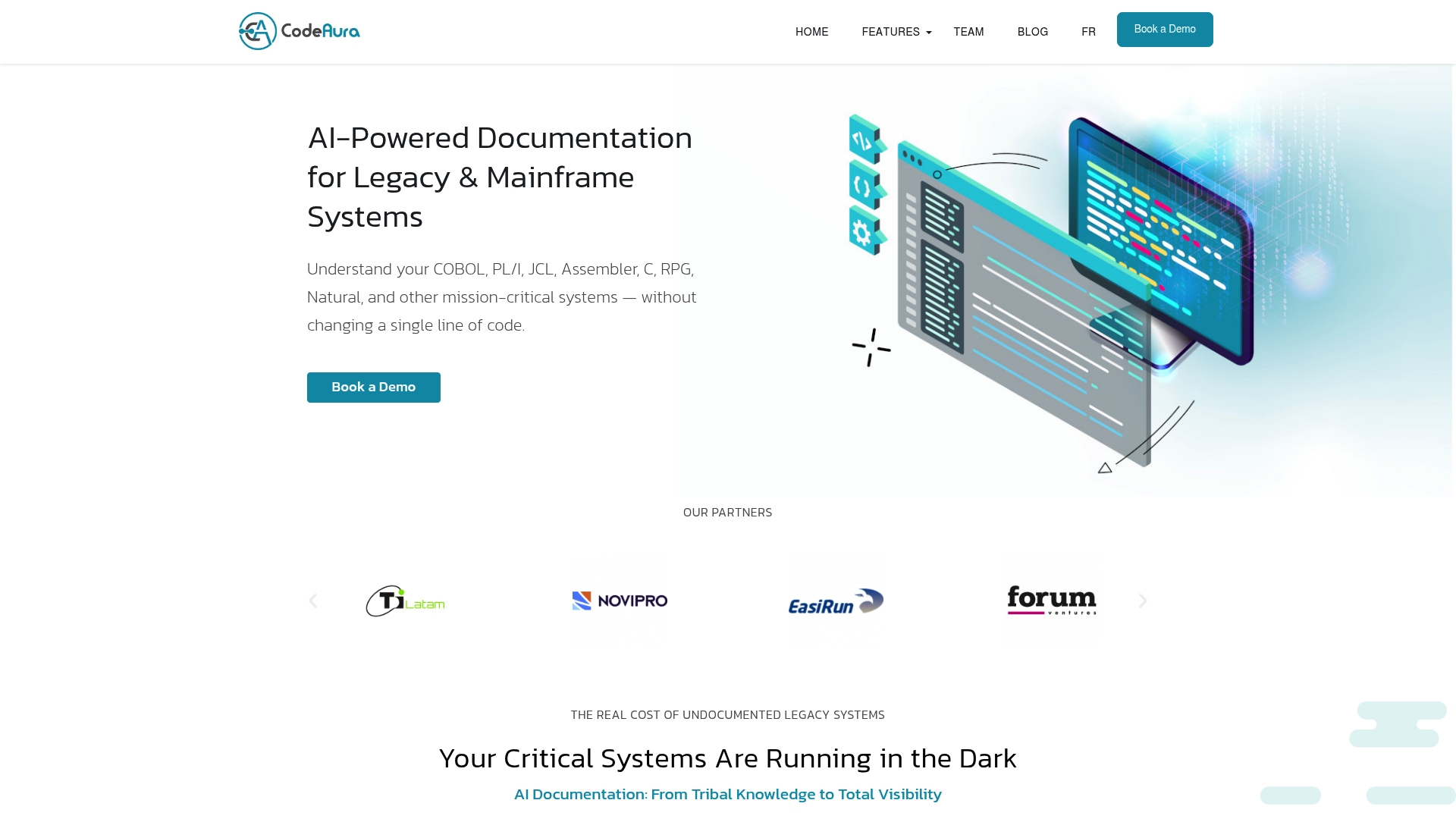
CodeAura reports it automates up to 80% of code transformation for legacy systems. That claim reflects a strong emphasis on reducing manual effort across COBOL, PL/I, and JCL codebases. The platform centers on low disruption to production and continuous knowledge transfer for regulated environments.
Core Features
The platform produces AI-generated technical documentation and extracts business logic while mapping system dependencies to reveal data flow and call chains. It auto-creates diagrams and architecture views to help teams visualize complex environments and audit trails. Multi-language support includes less common enterprise languages such as Natural, Mantis, and Supra PDM to cover unusual migration needs.
Key Differentiator
CodeAura focuses on AI-driven automation that covers a broad set of legacy languages while keeping changes out of production. That focus targets mission-critical modernization projects where risk reduction, audit readiness, and preservation of running systems matter most.
Pros
That figure about automation suggests a major reduction in manual transformation work for many standard legacy components, which shortens project timelines and lowers consultant hours. The product’s dependency mapping and documentation reduce tribal knowledge and simplify audits and training for retiring experts. Support for rare languages expands coverage for banks, healthcare firms, and manufacturers with long lived code assets.
Cons
-
Some complex or highly customized legacy systems will still need significant manual oversight, according to third party reviews.
-
Extremely specialized or proprietary code that lacks public documentation may not be fully handled by the automation.
-
Success depends on the initial quality of the code analysis, so highly obfuscated or poorly documented code can require manual adjustments.
When It May Not Fit
If your codebase contains many bespoke runtimes or proprietary extensions, CodeAura may not eliminate hands on work. If your modernization plan requires deterministic, line by line refactoring rules for every module, this platform might leave gaps. Small organizations without mission critical mainframe assets will find the scope and focus unnecessary.
Who It’s For
IT modernization teams in large enterprises that run mission critical mainframe or midrange systems will get the most value. Security, compliance, and operational continuity matter to these teams. Organizations preparing for audits or for knowledge transfer when experts retire will find the documentation and mapping capabilities useful.
Real World Use Case
A large bank used CodeAura to migrate and document decades old COBOL code, enabling compliance audits and preparing parts of the estate for cloud integration without taking systems offline. The project improved audit visibility and reduced reliance on a shrinking pool of institutional experts.
Pricing
Not applicable. The vendor lists pricing as informational only, without public tiered fees or a posted starting figure.
Website: https://codeaura.ai
Sembix Platform
At a Glance
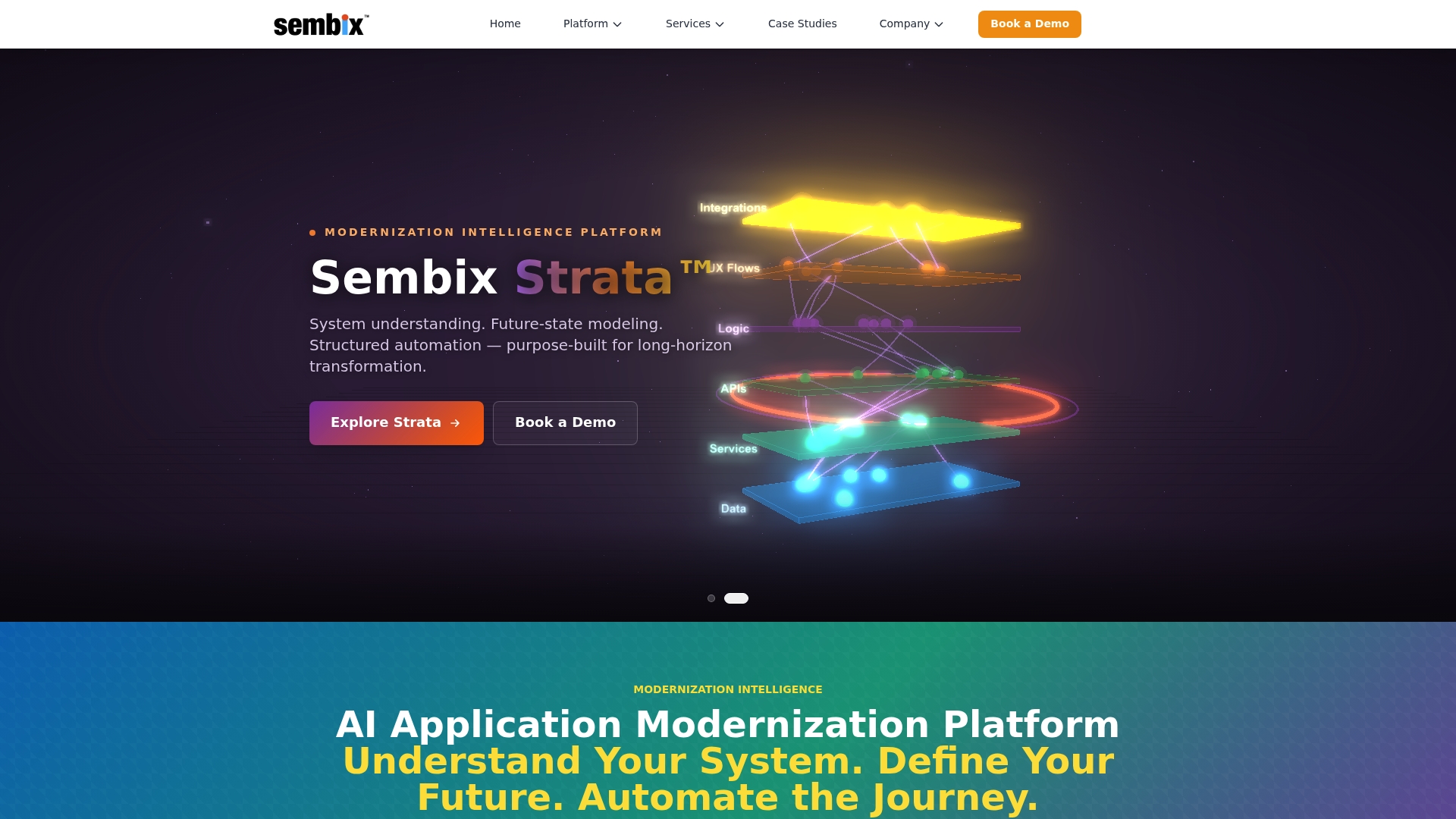
The vendor advertises reducing modernization timelines from years to months for large legacy programs. Sembix focuses on replacing manual reasoning with structured, system level intelligence that models both legacy and target architectures. The platform includes named modules such as Sembix Strata™ and CaveMapper™ for system understanding and IVR discovery.
Core Features
Sembix builds explicit system level models to map legacy components, dependencies, and target architecture choices. The platform generates an automated modernization backlog and sequences work while continuously reasoning about drift, misalignments, and readiness gaps. It also supports automated validation and domain level change execution and integrates with cloud services for scalability and security.
Key Differentiator
Sembix centers its approach on explicit, system level models of both existing and future states. That modeling drives automated sequencing and safe change execution rather than relying on task level checklists. The modeling focus makes it easier to predict the blast radius of changes and to enforce governance during long term transformations.
Pros
System level understanding reduces guesswork when teams plan broad transformations. The platform automates complex tasks such as backlog generation and validation, which shortens schedules and reduces manual coordination. The vendor states the platform is SOC 2 compliant and emphasizes cloud security expertise, which supports enterprise and public sector risk controls.
Cons
-
Mainly suited for large scale, long term modernization projects; it may be overkill for small upgrades.
-
Requires familiarity with system modeling concepts, which raises the onboarding curve for some teams.
-
Depends on cloud infrastructure, so it is not a fit for strictly on premise only environments.
When It May Not Fit
Teams doing small patch level work or single application upgrades will find the platform heavyweight. Organizations that cannot move core assets to cloud services will face integration and operational constraints. Groups lacking architecture modeling skills will need training before the platform can deliver full value.
Notable Integrations
Sembix connects with AWS cloud services to handle scalability, storage, and security controls. That integration supports cloud native migration patterns and managed infrastructure workflows.
Who It’s For
Engineering and IT teams responsible for enterprise wide modernization programs will benefit most. Public sector modernization offices and large corporations planning multi year replatforms match the target profile. Teams that need governance, drift detection, and automated sequencing will get the greatest return.
Real World Use Case
The vendor describes a government agency using Sembix Strata™ to model legacy systems and migrate toward cloud native architectures. That case shows the platform guiding sequencing, validation, and compliance checks across many subsystems. The account highlights risk reduction and faster decision cycles during a complex transformation.
Pricing
Not applicable. The listing is informational only and does not include public pricing or tiering. Procurement typically proceeds through vendor engagement for tailored scopes and contracts.
Website: https://sembix.ai
Adapts HC3
At a Glance
Adapts HC3’s marketing materials state it mapped 12 million lines of COBOL for a large bank, cutting modernization discovery from 18 months to 1 month. The claim highlights the platform’s focus on deep legacy code work inside regulated environments. That outcome illustrates how the product is aimed at heavy legacy estates, not small projects.
Core Features
Adapts HC3 runs continuous enterprise wide code indexing and mapping that keeps a live model of the code estate. The system builds a deterministic code ontology from static analysis and AI reasoning and exposes endpoints for architecture and dependency queries. The vendor advertises support for 50+ languages, including legacy systems such as COBOL, Fortran, and RPG, and it offers change impact analysis and conformance monitoring per commit.
Key Differentiator
The decisive feature is continuous, deterministic mapping that stays current with every commit and ties dependency mapping to real code. That approach produces a queryable, machine readable ontology you can interrogate for risk, modernization, or release planning. The persistence of the model across commits reduces manual discovery work during large refactors.
Pros
Adapts HC3 is grounded in actual code rather than heuristics, which improves accuracy for dependency and business logic mapping. It supports enterprise scale codebases across many languages and maintains maps continuously so teams do not chase stale documentation. The platform is built for regulated and mission critical environments, offering on premises, air gapped, or private cloud deployment to meet compliance and security constraints.
Cons
- Third party reviews report high setup complexity and significant engineering effort for large deployments.
- Pricing uses enterprise custom models and may be expensive for smaller organizations.
- Public documentation provides limited detail about specific CI CD or DevOps tool integrations.
When It May Not Fit
This product is not suited for small codebases or short lived projects where the deployment overhead outweighs benefits. Organizations without senior engineering capacity for an initial rollout will struggle with onboarding. Firms needing clear, standardized pricing or out of the box CI CD connectors may find gaps in the public material.
Who It’s For
Enterprise architects, modernization teams, and senior engineering leaders at regulated or mission critical organizations will get the most value. Teams with large legacy estates and strict compliance constraints match the platform’s design. Buying decisions should assume a multi month onboarding and an enterprise scale commitment.
Real World Use Case
A regulated bank used the platform to map a massive COBOL estate and speed discovery work dramatically. That example shows the platform guiding modernization prioritization and compliance evidence gathering. Teams measuring risk before refactor or migration will find the queryable model useful for scoped impact analysis.
Pricing
Pricing is not publicly disclosed and uses enterprise custom pricing. Expect negotiations and a contract sized for large organizations rather than a fixed list price. Budget planning should include implementation and engineering resources for initial mapping and onboarding.
Website: https://adapts.ai
Comparison of alternatives
The available modernization providers offer distinct benefits within structured transformation workflows, with each addressing specific operational needs for enterprise teams. Through their respective designs, they prioritize automation, governance, and compliance in varying degrees.
Automation Efficiency
Codemod stands out for its compiler-aware transformation engine that enables scalable edits across large codebases. This substantially reduces operational expenses related to AI-based workflows, a unique advantage for teams tasked with migrating multiple repositories simultaneously. Conversely, Golden Path Digital offers sequenced dependency parsing that aligns with compliance requirements, reducing unintentional errors in regulated environments.
Knowledge Transfer Support
CodeAura excels in legacy system documentation and dependency mapping, uniquely covering seldom-used languages that underpin operations in banking and healthcare. In comparison, Golden Path Digital focuses its support on IBM i and PHP frameworks, standing apart with its marketing alignment feature that enables additional visibility for ongoing software upgrades.
Best fit
- Enterprises requiring IBM i modernization workflows incorporating secure deployment methodologies will benefit from Golden Path Digital’s structured services.
- Development teams managing extensive repositories and preferring orchestrated rollback protection could opt for Codemod’s scalable and precise transformation tooling.
- Organizations preparing for expert transitions in distinct legacy languages, such as Natural and Supra, will find CodeAura favorable for its documentation outputs.
- Regulated industries featuring sprawling COBOL assets can leverage Adapts HC3 for its live queryable code dependency engine.
- Agencies migrating large public systems toward hybrid-cloud architectures may utilize Sembix for its overlap modeling of legacy and current state architecting.
Our pick
Golden Path Digital distinguishes itself through its compliance-oriented dependency mapping methodology and air-gapped deployment, ensuring high security and auditability in critical modernization projects. However, for teams prioritizing rapid repository-wide automation or cloud-centric alignment, exploring alternatives such as Codemod may better suit their objectives.
The comparison chart showcases various legacy system modernization platforms, highlighting their features, unique strengths, ideal use cases, and limitations.
| Platform | Core Features | Key Differentiator | Best For | Limitations |
|---|---|---|---|---|
| Golden Path Digital | Code refactoring tools, marketing consulting | Structured rules for dependency mapping | Enterprises using legacy systems | High cost and extended implementation timelines |
| Codemod | Compiler-aware transformations, multi-repo orchestration | Reduces AI token use | Large teams coordinating cross-repo changes | Steep learning curve for AST transformations |
| CodeAura | Documentation generation, dependency mapping | Broad language support | Teams modernizing rare or legacy languages | Limited automation for highly customized systems |
| Sembix Platform | Legacy-to-cloud models, compliance-focused sequenced tasks | System-level modeling | Complex enterprise-wide modernization programs | Requires cloud architecture knowledge to maximize utility |
| Adapts HC3 | Continuous code indexing, deterministic mapping | Persistent real-time dependency model | Mission-critical legacy systems | Complex setup and high engineering resource requirements |
How to Choose Between Cloud and On Premise for Legacy Modernization
The choice between cloud and on premise solutions raises key concerns about security, compliance, and operational visibility. Businesses managing legacy IBM i and PHP systems need clear dependency mapping and auditability before applying AI-driven transformations. Golden Path Digital addresses these challenges with structured, rules-based modernization tools like AS/Forward and Laravel Ascend, paired with QuantaPath AI for automation that protects sensitive data through air-gapped deployment options.
Benefits include:
- Reduced consulting overhead by aligning technical upgrades with marketing efforts
- Reliable traceability for compliance teams
- On-premises deployment options that keep data within corporate infrastructure
Get detailed insights and proven strategies at Golden Path Digital to guide your modernization decisions with confidence. Book a consultation and start mapping your dependencies today.
FAQ
What features make Golden Path Digital suitable for enterprises with legacy systems?
Golden Path Digital excels in modernizing legacy systems by utilizing a structured rule set for dependency mapping. This feature creates traceable decision points and audit records for each change, ensuring compliance and reducing the chances of missing hidden runtime dependencies during refactors.
How does Golden Path Digital compare to Codemod in terms of pricing?
Codemod offers fixed pricing tiers, with its Team plan starting at $1,000 per month. Conversely, Golden Path Digital provides consultative, scope-driven pricing, making it adaptable for varying project complexities and compliance needs.
Which platform is better for enterprises with strict compliance requirements: CodeAura or Golden Path Digital?
CodeAura focuses on reducing manual effort for legacy migrations, particularly in highly regulated environments. However, Golden Path Digital’s air-gapped deployment options enhance data security during modernization processes, appealing to firms needing stringent compliance controls.
What capabilities does Golden Path Digital offer for marketing integrations?
Golden Path Digital combines code modernization with digital marketing services, such as SEO and PPC strategies. This dual focus ensures technical advancements support lead generation efforts effectively, which is particularly beneficial for marketing teams.
Can Golden Path Digital accommodate businesses needing on-premises solutions?
Yes, Golden Path Digital offers air-gapped deployment options, allowing businesses to run its transformation models without sending data to external cloud providers. This capability supports organizations that must maintain complete data control due to compliance or security concerns.